What the data shows
- In our most recent snapshot we counted about 610 USDT/MAD ads on Binance, 290 on OKX and 140 on Bybit. Binance is the deep market.
- Buyers paid 10.34–10.40 MAD per USDT, about 6% above the aggregator USD/MAD rate. Sellers got 10.22–10.29.
- Attijariwafa and CIH each appear in about 270 Binance ads. CashPlus appears in 93, Wafacash in 10.
- Escrow protects the crypto, not your bank account. Stolen-money payments and bank flags are the main Moroccan risks.
- Paxful closed in 2025 and NoOnes closed its marketplace in August 2026.
How P2P became Morocco’s crypto market
Peer-to-peer (P2P) trading is the main way to buy USDT with dirhams in Morocco. You pick a seller’s ad on Binance, OKX or Bybit, the platform locks their USDT in escrow, you pay by bank transfer or CashPlus, and the coins are released once the seller confirms. When we last checked, buyers paid about 10.34 to 10.40 MAD per USDT.
When the Office des Changes declared in November 2017 that virtual-currency transactions breach exchange rules, it did not stop Moroccans from buying crypto. It only took banks and card networks out of the loop, and P2P filled the gap. Instead of a bank sending dirhams to an exchange, a person sends dirhams to another person, and the exchange only moves the crypto between their two accounts.
For a while the go-to venues were LocalBitcoins and Paxful. Moroccan press articles from 2021 still describe them as the way around the ban. Both are now history, and the market has consolidated on the P2P desks of the big global exchanges. Binance added the dirham in April 2020 and has dominated ever since. Around it sits an informal layer of Telegram and WhatsApp “changeurs”, concentrated in Casablanca and Rabat, who often use Binance P2P as the settlement rail for deals agreed in chat. That informal layer is where most fraud happens, which is why this guide sticks to trades opened and settled inside the platform.
The numbers from our latest P2P snapshot
At our latest check, we queried the public ad-listing endpoints of the three main platforms in the morning. The figures below are a snapshot: prices move during the day and ad counts are higher in the evening.
| Platform | You buy USDT at | You sell USDT at | Ads (buy / sell side) |
|---|---|---|---|
| Binance P2P | 10.34–10.36 MAD | 10.26–10.29 MAD | ≈ 210 / 400 |
| OKX P2P | 10.34–10.37 MAD | 10.27–10.28 MAD | ≈ 90 / 200 |
| Bybit P2P | 10.38–10.40 MAD | 10.22–10.29 MAD | ≈ 53 / 86 |
Binance P2P · our snapshot Prices are the best few offers on the first page, excluding one Bybit outlier with a 36 MAD limit. KuCoin also lists MAD ads, but its public page showed stale prices, while Bitget (about ten ads per side), MEXC (around 60) and Gate (sell side only) run much thinner dirham markets.
Notice the shape of the market. There are about twice as many advertisers offering to buy USDT for dirhams as offering to sell it, yet the spread between the two sides on Binance is only about 0.6%. Sellers will always find a buyer. Buyers face tight prices, but comparing the top few ads still pays.
Which banks can you use for P2P in Morocco?
Across the 610 Binance ads, the payment methods tell you which Moroccan banks carry the P2P economy. Attijariwafa was listed 276 times and CIH 273 times, with a further 67 “Attijari Bank” and 46 “CIH Bank Morocco” labels on top. Then come BMCE / Bank of Africa (168), Banque Populaire (121), BRD (103) and a generic “Bank Transfer” (99). Further down: Cash Plus (93), Société Générale (68, plus 9 SGMA), Saham Bank (52), Crédit du Maroc (38), CFG Bank (37) and Crédit Agricole (34). Skrill appeared 18 times, Wafacash 10, Neteller 9, Umnia Bank 7, Western Union 5 and Al Barid Bank only twice.
What was missing is just as telling. We saw no ads for Orange Money, inwi money, Chaabi Cash or Damane Cash, and no “cash in person” offers at all. OKX’s methods followed the same pattern, with Attijariwafa, CIH, Bank of Africa, BCP, BRD, Crédit du Maroc, Société Générale and Poste Maroc.
In practice, if you bank with Attijariwafa or CIH you will always find a counterparty at the same bank, which means an instant internal transfer and a faster release. Customers of smaller banks may wait a few minutes longer, but they rarely pay a worse price. Cash users can go through CashPlus; Binance showed 37 Cash Plus ads on the buy side and 56 on the sell side.
How does escrow work, and where does it stop?
Escrow is what makes P2P bearable. When you open an order to buy 2,000 MAD of USDT, the exchange immediately locks the seller’s USDT. The seller can no longer move it. You get the seller’s payment details inside the order and a countdown, set by the advertiser, to send the dirhams. Once you have paid, you click “transferred”, and the seller has to check their bank and release the coins. If the seller does not, you open an appeal and the platform’s support reviews the chat, the receipts and the bank proof.
- 1 Pick a verified ad 98%+ completion, hundreds of orders
- 2 Escrow locks the USDT The platform holds the seller’s coins
- 3 Send MAD from your bank Instant transfer in your own name
- 4 Seller confirms and releases Usually within 15–45 minutes
- 5 Swap to BTC or withdraw Spot fee around 0.1%
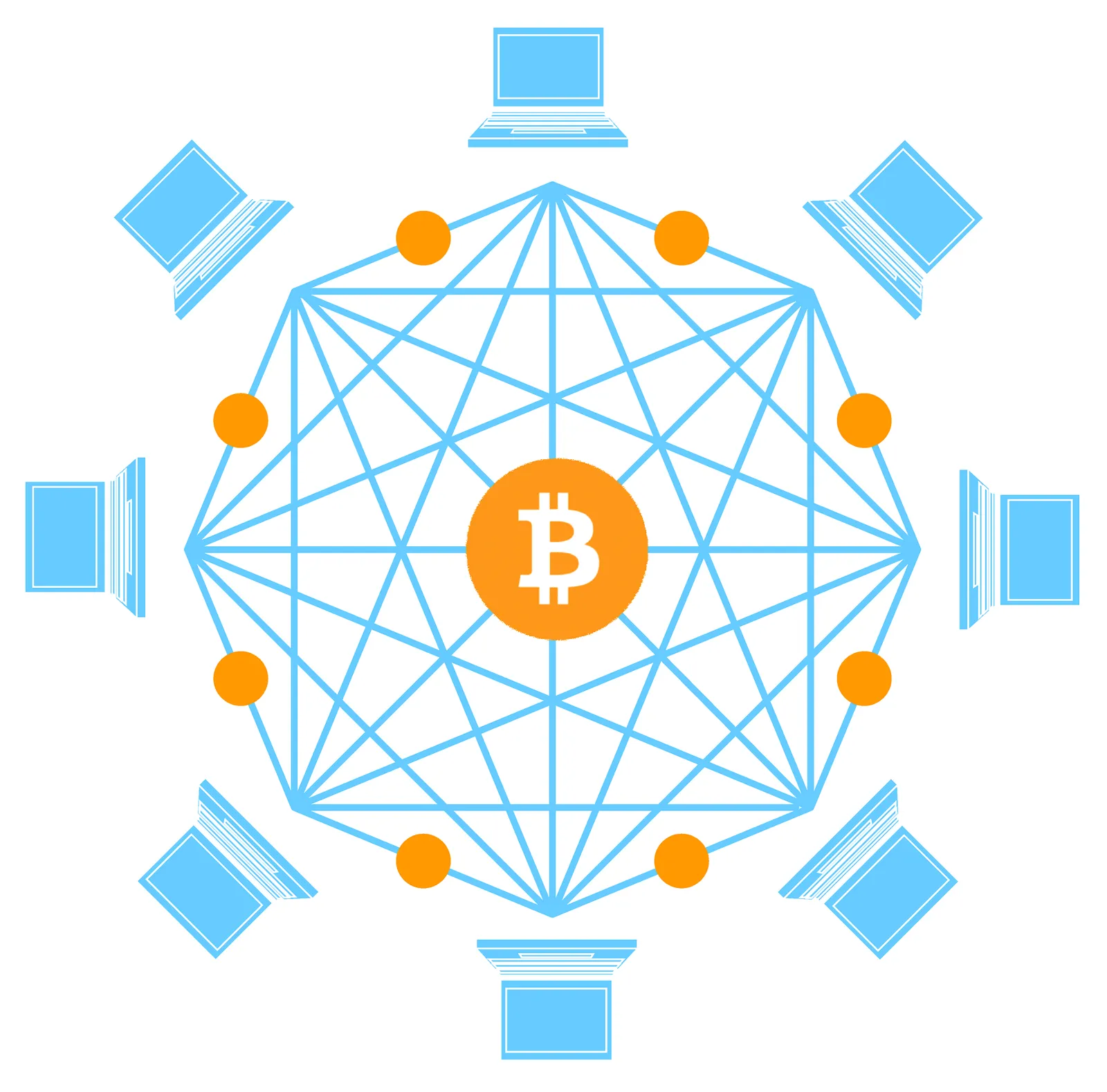
What escrow cannot do is protect the dirham side. The platform never sees your bank account. If you are the seller and you release USDT on the strength of a fake screenshot, the platform has nothing to claw back. If you are paid with money stolen from someone else, the platform cannot stop that person’s bank from reporting your account. And if you pay outside the order, by sending money to a number given in chat, escrow does not exist at all.
KYC, limits and fees
All three platforms require identity verification before P2P, usually a passport or CNIE and a selfie. Advertisers often add their own conditions: a minimum account age, a number of completed trades, or a request that the sender’s name matches the verified name. That last rule is good practice and you should apply it yourself when selling.
Order limits are set by each advertiser. On Binance’s first page, minimums ranged from 100 to 15,000 MAD and maximums reached about 108,000 MAD, with many ads capped at 24,000 MAD. Large buyers often split orders across sellers rather than wait for one big ad.
Fees are low for ordinary users. Binance charges takers nothing on P2P; makers pay between 0 and 0.35% depending on the market, though we could not confirm the current dirham rate. Bybit and KuCoin advertise no P2P fees. The real cost is the price: at 10.34 MAD per USDT against an aggregator rate of about 9.73, you pay roughly 6.3% over the official dollar. We could not fetch Bank Al-Maghrib’s own fixing for the day of our snapshot, so treat the exact premium as an estimate.
Reading merchant badges
Ads show a completion rate, a number of trades and, on Binance and others, a verified-merchant badge for advertisers who passed extra checks and posted a deposit. A badge reduces the odds of a scam but is not a guarantee. Look for a high order count over several months, a completion rate above 95% and recent positive feedback. A brand-new account offering a price well above the market is the classic warning sign.
Can your bank freeze your account over P2P?
The question we hear most often from readers is “can my bank block me?”. There is no published rule saying that Moroccan banks freeze accounts for P2P, and we could not find a sourced report naming a bank that does so systematically. What exists is the normal anti-money-laundering machinery. Banks generated 34.4% of the 5,208 suspicious-transaction reports received by the ANRF in one year, according to Hespress. One investigation the paper described started with a Casablanca bank flagging a student’s repeated transfers to people across several cities. Investigators linked them to crypto trading.Hespress, Apr 2024
The sharper danger for sellers is “dirty money”: a buyer pays you with funds stolen through phishing or a fake sale, the victim complains, and your account becomes part of a police case. Moroccan police have described USDT extortion proceeds being converted to dirhams through social-media contacts. Selling only to verified accounts whose name matches the transfer is the best defence.
TelQuel reported in 2023 that some P2P traders label their bank transfers “Ecom” so that they look like e-commerce payments. We mention it because you will see it in ads, not as advice. Misdescribing a transfer does not change its legal nature, and it can make an explanation to your bank or the Office des Changes harder, not easier. In 2026 the Office des Changes sent formal notices to residents over crypto activity, and TelQuel reported that P2P transfers between residents were among the flows it looked at.
A safety checklist before every trade
- Stay inside the orderPay only to the details shown in the open order. Ignore anyone who moves you to WhatsApp or Telegram.
- Check the counterpartySeveral hundred trades, a completion rate above 95%, months of history. Be wary of prices that beat the market by a lot.
- Match the namesWhen selling, release only if the transfer comes from an account in the buyer’s verified name.
- Check your own bank appNever release on a screenshot or an SMS. Wait until the money is visible and cleared.
- Start smallA first trade of a few hundred dirhams with a new seller costs little to lose.
- Keep the evidenceOrder number, chat, receipt and bank statement line. You may need them for an appeal or a regulator.
For the scams we see most, from fake receipts to triangle fraud and fake support agents, read our guide to crypto fraud in Morocco.
Paxful, NoOnes and the end of independent P2P sites
Older French guides still send Moroccans to LocalBitcoins, which shut in 2023. Paxful, the other big name, announced it would wind down its marketplace from 1 November 2025 and pointed non-US users to NoOnes, a platform launched by its co-founder.Bitcoin Magazine NoOnes did not last long as a refuge. After the EU sanctioned an entity named NoOnecrypto Inc., the platform said it lost key partners, closed its P2P marketplace on 21 August 2026 and switched to withdrawal-only mode.CryptoSlate
The lesson for Moroccan users is simple. Independent P2P sites have no safety net once their partners leave. If you still have a balance on NoOnes, withdraw it. For new trades, the dirham liquidity now sits in the order books of the large exchanges, which we compare in our ranking of the best crypto exchanges in Morocco. Our Binance review, Bybit review and OKX review look at each P2P desk in detail.
After the trade: where to keep your USDT
Once you hold USDT, you can leave it on the exchange, swap it for Bitcoin, or move it to a platform you trust more for storage. Some readers keep their P2P desk and their savings on different exchanges, so that a P2P dispute never freezes their long-term holdings. CEX.IO, operating since 2013 with FinCEN registration, US money-transmitter licences and an EU entity in Spain, is one option used this way. It does not accept Moroccan cards, so you fund it by sending crypto. To convert USDT into BTC step by step, follow our guide to buying Bitcoin from Morocco; to go the other way, see selling crypto for dirhams.
Send the USDT you bought to an established exchange and convert or hold it there.
Licensed in several jurisdictions · external linkSources
Official and press sources cited in this guide. An external link does not imply any partnership.
- Binance P2P · our snapshotp2p.binance.com
- Hespress, Apr 2024fr.hespress.com
- Bitcoin Magazinebitcoinmagazine.com
- CryptoSlatecryptoslate.com
FAQ
Is Binance P2P available in Morocco?
Yes. Binance added the dirham to its P2P marketplace in April 2020, and in our most recent snapshot it listed about 610 USDT/MAD ads, roughly 210 to buy and 400 to sell. Binance holds no Moroccan licence, and the Office des Changes position from 2017 still applies to crypto transactions.
What is the USDT price in dirhams on P2P?
At our latest check, buyers paid about 10.34 to 10.40 MAD per USDT: 10.34 to 10.36 on Binance, 10.34 to 10.37 on OKX and 10.38 to 10.40 on Bybit. Sellers received about 10.22 to 10.29 MAD. That is roughly 6% above the aggregator USD/MAD rate of about 9.73.
Can I pay with CashPlus on Binance P2P?
Yes, some sellers accept a cash deposit at a CashPlus agency. We counted 93 Binance USDT/MAD ads mentioning Cash Plus and 10 mentioning Wafacash. Cash trades are slower to confirm and fake receipts are a known risk, so pick sellers with long histories and keep the original receipt.
Can my bank account be frozen because of P2P?
It can be flagged. Banks are the main source of suspicious-transaction reports to Morocco's financial intelligence unit, the ANRF, and a 2024 case began with a bank alert on repeated transfers linked to crypto. The bigger danger is receiving stolen money from a fraudulent buyer, which can freeze your account during a police inquiry.
Are there fees on P2P trades in Morocco?
Usually not for ordinary buyers. Takers, meaning people who answer an existing ad, pay no trading fee on Binance P2P, and Bybit and KuCoin also advertise zero P2P fees. Makers who post ads may pay a small fee on some platforms. The real cost is the price premium built into the ads, not the fee.
What happened to Paxful and LocalBitcoins in Morocco?
Both are gone. LocalBitcoins shut down in 2023, and Paxful wound down its marketplace from 1 November 2025, directing users to NoOnes. NoOnes in turn closed its P2P marketplace on 21 August 2026 after EU sanctions hit an entity linked to it, leaving withdrawals only.
Keep reading
How to buy Bitcoin
Four ways to buy Bitcoin from Morocco: bank-transfer P2P, CashPlus, a foreign card or a USDT swap. Real costs (about…
Read the guideSell crypto
Turn Bitcoin or USDT into dirhams via P2P to your bank or a CashPlus pick-up, at about 10.26 MAD per USDT: safe steps,…
Read the guide
Scams & safety
Fake P2P receipts, triangle fraud that freezes bank accounts, fake platforms using the AMMC logo: how crypto scams…
Read the guideBinance review
Binance runs Morocco's biggest USDT/MAD P2P market, with about 610 ads in our snapshot. Banks that work, real fees,…
Read the review