In 30 seconds
- The converter below shows the global spot price of BTC converted to dirhams, refreshed from CoinGecko when you open the page.
- On Moroccan P2P you pay about 6% more: USDT sold for 10.34–10.40 MAD in our most recent snapshot, against an official dollar of about 9.75 MAD.
- One bitcoin is 100 million satoshis. You never need to buy a whole coin; 100 MAD bought roughly 12,000 satoshis at that rate.
- The dirham is pegged to a 60% euro / 40% dollar basket with a ±5% band set by Bank Al-Maghrib, so a strong euro can move your BTC price even when bitcoin stands still.
Global spot price converted to dirham. On Moroccan P2P you usually pay a premium of about 6%.
At the time of writing, one bitcoin was worth about 803,000 MAD at the global spot price, or roughly 82,400 dollars. Through Moroccan P2P you pay closer to 850,000 MAD, because USDT sells for about 6% above the official dollar rate. The converter above shows today’s live spot figure.
The figure in the box is the spot price: what bitcoin trades for on large international exchanges, converted at the market USD/MAD rate. It is the right number for tracking the market. It is not the number a seller in Rabat will quote you on WhatsApp or on Binance P2P, and the gap between the two is the single most useful thing to understand before you buy.
Why the P2P price is higher than the converted price
There is no licensed exchange in Morocco that lets you wire dirhams and receive bitcoin. Draft law 42.25 would create such licences, but it had not been adopted at the time of writing, and the Office des Changes position of November 2017 still applies. So in practice almost every Moroccan buyer goes through peer-to-peer marketplaces. You pay a person in dirhams, by bank transfer or CashPlus deposit, and receive USDT, a dollar stablecoin. Then you swap USDT for BTC on the exchange at the global price. Our P2P guide covers that process step by step.
The catch is the first leg. A dollar from a Moroccan bank account is not freely available for buying crypto abroad, so USDT in dirhams carries a premium. For our most recent snapshot we pulled the public order books of three platforms:
| Platform | Buy USDT (MAD) | Sell USDT (MAD) | Ads (buy / sell side) |
|---|---|---|---|
| Binance P2P | 10.34–10.36 | 10.26–10.29 | 210 / 400 |
| Bybit P2P | 10.38–10.40 | 10.22–10.29 | 53 / 86 |
| OKX P2P | 10.34–10.37 | 10.27–10.28 | 89 / 200 |
Our P2P snapshot Against an aggregator USD/MAD rate of about 9.73–9.75 at that moment, the best buy price was roughly 6% above the official dollar. The sell side sat about 5% above. In other words, if you buy bitcoin through P2P and sell it again the same day, you lose roughly one percentage point to the spread, on top of any price move.
How the premium moves
The premium is not a fixed fee. Nobody sets it. It is the price at which sellers are willing to part with their USDT, and in our reading it reacts to a few forces (these are observations, not measured effects):
- Enforcement news. When the Office des Changes started sending formal notices to crypto holders in spring 2026, the natural reaction for sellers was more caution, and caution gets priced in.
- Remittance seasons. Summer, when Moroccans abroad come home, and the run-up to Eid bring more euros and dollars into circulation, which can ease the premium.
- Bank friction. If a major bank starts asking questions about repeated transfers from strangers, sellers drop that payment method or price the risk in.
- Global moves. In a sharp bitcoin rally, demand for USDT jumps and the dirham premium can widen for a few days.
Our verdict: treat 5–7% as the normal range and anything above 8% as a sign to wait or compare platforms. If an ad is well below the official rate, assume a scam rather than a bargain. Our scam guide explains the fake-receipt and chargeback tricks behind most “too good” prices.
How is the USD/MAD rate set?
Every bitcoin price in dirhams starts as a dollar price, so the exchange rate matters as much as the crypto market. The dirham is not freely floating. Bank Al-Maghrib computes a central rate from a basket made of 60% euro and 40% US dollar, and it lets the market rate move within ±5% of that central rate.Bank Al-Maghrib The band was widened from ±0.3% to ±2.5% in January 2018, then to ±5% on 9 March 2020. BAM publishes the band limits daily at market opening and a reference rate in the afternoon.
The practical effect surprises many people. Because the euro weighs 60% in the basket, a strong euro against the dollar tends to strengthen the dirham against the dollar too. A stronger dirham means fewer dirhams per dollar, so the bitcoin price in MAD can fall slightly even on a day when bitcoin is flat in dollars. Over 2026 the market USD/MAD rate moved within a band of roughly 9.0 to 9.8, according to aggregator data. That alone is a swing of about 8% in the dirham value of any dollar asset.
“1 bitcoin kam dirham”: satoshis and small amounts
The most common question in Moroccan searches is simply how many dirhams one bitcoin is worth. The answer, about 800,000 MAD at spot when we last checked, often puts people off. It should not, because bitcoin is divisible to eight decimal places. The smallest unit is the satoshi, named after Bitcoin’s pseudonymous creator: 1 BTC equals 100,000,000 satoshis. At that spot price, one satoshi was worth just under one centime, about 0.008 MAD.
Some useful mental anchors, all from the same snapshot:
- 0.01 BTC (one million satoshis) was worth about 8,030 MAD at spot, or about 8,520 MAD through the P2P route.
- 0.001 BTC was about 803 MAD at spot.
- 1,000 MAD bought around 117,000 satoshis through P2P.
A student in Fès who earns in dollars through Payoneer and wants a small, regular bitcoin position does not need to wait to afford a “whole” coin. Exchanges let you buy fractions down to a few dollars. What matters is the price per unit you pay, not the number of coins.
Common amounts at an illustrative rate
The table below is illustrative only. It uses the CoinGecko spot price at the time of writing, about 803,300 MAD per BTC. For the P2P route it assumes 10.34 MAD per USDT with BTC at 82,413 dollars, about 852,150 MAD per BTC. It ignores exchange trading fees of around 0.1% and network fees. Use the converter for today’s figures.
| You spend | BTC at spot | BTC via P2P route | Satoshis via P2P |
|---|---|---|---|
| 100 MAD | 0.000124 | 0.000117 | ≈ 11,700 |
| 500 MAD | 0.000622 | 0.000587 | ≈ 58,700 |
| 1,000 MAD | 0.001245 | 0.001174 | ≈ 117,400 |
| 5,000 MAD | 0.006224 | 0.005868 | ≈ 586,800 |
| 10,000 MAD | 0.012449 | 0.011735 | ≈ 1,173,500 |
The gap between the two middle columns is the P2P premium in action. On 10,000 MAD it is worth about 71,000 satoshis, or roughly 570 MAD at the snapshot price.
Where does the bitcoin price come from?
Bitcoin has no single official price. Each exchange runs its own order book, and the price you see is the last trade, or the best bid and offer, on that venue. The big dollar and USDT markets on Binance, Coinbase, OKX, Bybit or CEX.IO usually stay within a few tenths of a percent of each other, because arbitrage traders close any gap quickly.
Aggregators such as CoinGecko and CoinMarketCap collect prices from hundreds of exchanges and compute a volume-weighted average, filtering out venues with suspicious data. That is why our converter uses CoinGecko: it is a fair “market price”, not the price of one platform. The MAD figure on these sites is a conversion, because almost no bitcoin trades directly against the dirham on a regulated venue.
P2P order books are the only place where a true BTC or USDT price in dirhams forms. They are thinner than international markets, they differ by payment method (CashPlus ads usually ask a bit more than bank-transfer ads), and they can lag during fast moves. Treat them as the local retail price, and the CoinGecko figure as the wholesale reference.
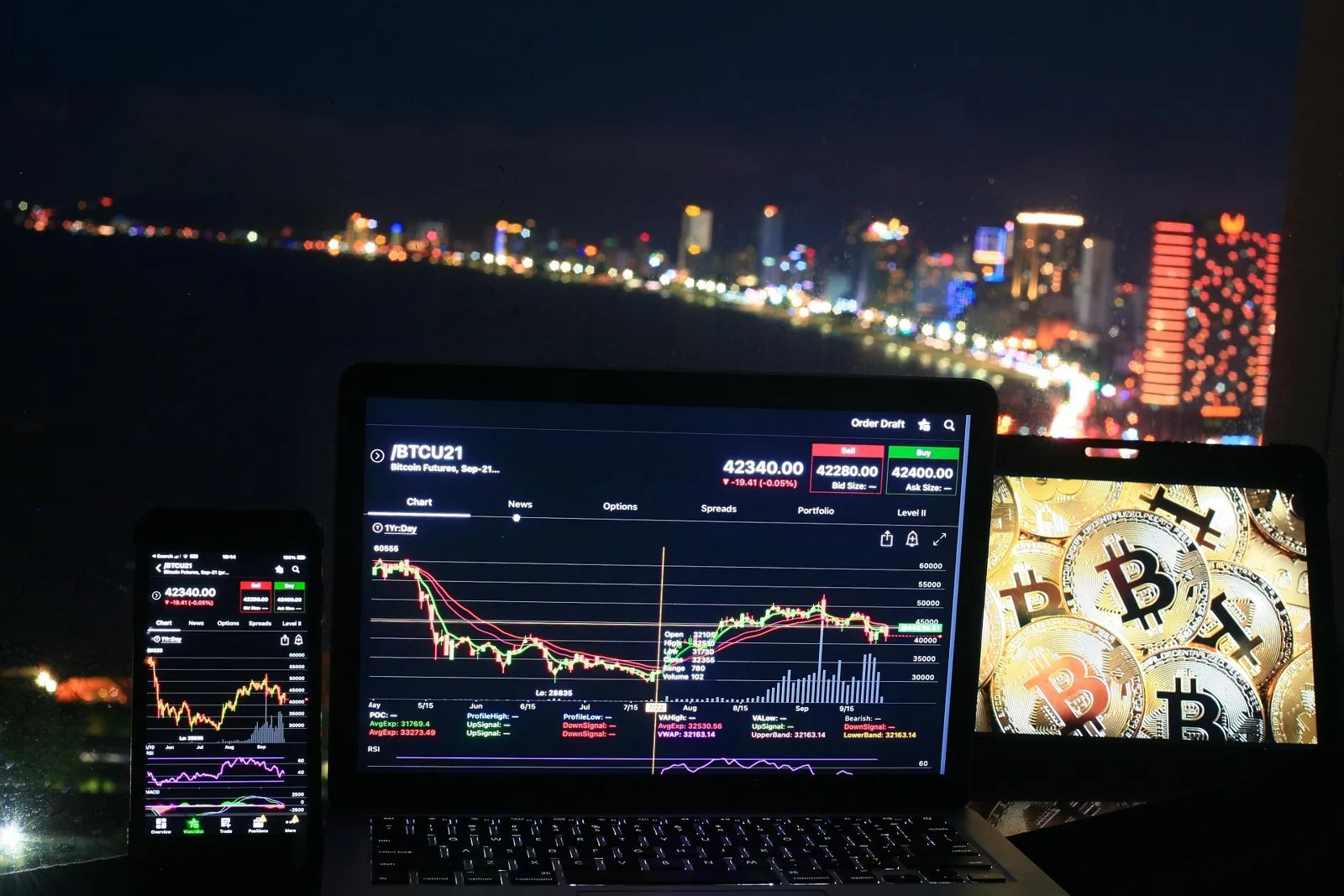
How has the bitcoin price in dirhams changed?
We do not publish a historical chart in MAD that we cannot source. What we can do is show the logic, so you can rebuild any figure yourself. Take the dollar price on a date, then multiply it by the USD/MAD rate of that same date, ideally BAM’s reference rate.
Bitcoin’s all-time high, according to CoinGecko, was about 126,080 dollars on 6 October 2025. An aggregator rate for that day put the dollar at about 9.11 MAD, which gives roughly 1.15 million MAD at spot. That is our calculation, and through P2P the figure would have been several percent higher. Since then bitcoin has fallen back: at our latest check it traded around 82,400 dollars, about 35% below that peak.
Two further points matter for anyone comparing old and new prices. First, the dirham itself has moved. A dollar cost about 9.11 MAD in October 2025 and about 9.75 MAD at our latest check, so part of any change in the MAD price comes from the currency, not from bitcoin. Second, Moroccan media and families often quote large sums in centimes, where 1 MAD equals 100 centimes. Hespress, for example, has headlined bitcoin’s price as “70 million centimes”, which is 700,000 MAD. If someone tells you bitcoin is “80 million”, they very likely mean 800,000 dirhams.
How to read a P2P quote before you pay
On Moroccan P2P, costly mistakes usually come from misreading an ad, not from the price itself. When an ad says “10.36 MAD · Limit 500–24,000 MAD · Attijariwafa · CIH”, here is what to check:
- Price per USDT, not per BTCNearly all MAD liquidity is in USDT. Multiply the ad price by the dollar price of BTC to get your effective bitcoin price, then compare it with the converter.
- Premium versus the official dollarDivide the ad price by the BAM reference rate. 10.36 / 9.75 is about 1.063, so a 6.3% premium. Above 8%, compare other ads first.
- Limits and payment methodMake sure your amount fits the minimum and maximum, and that the seller accepts your own bank. Paying from a third-party account is a classic route to frozen funds.
- Seller recordLook at the completion rate and number of trades. A new account with a perfect price is a warning sign.
- Escrow and timerPay only after the platform shows the USDT locked in escrow, and mark the order as paid only once the transfer has really left your account.
Once you hold USDT, swapping it for BTC costs a fraction of a percent on any large exchange. Many Moroccan users send their P2P USDT to an international platform for that step. CEX.IO, for instance, has operated since 2013 and holds US money-transmitter licences, FinCEN registration and an EU entity in Spain. Note that it does not accept Moroccan Visa or Mastercard deposits, so you fund it with crypto, and that no exchange is licensed in Morocco. Our CEX.IO review and our ranking of the best crypto exchanges in Morocco compare the options.
Deposit the USDT you bought on P2P and swap it for bitcoin at the global market rate.
Licensed in several jurisdictions · external linkSelling: the price works in reverse
When you sell, the same logic applies in the other direction. You swap BTC for USDT at spot, then sell USDT on P2P for around 10.22–10.29 MAD, which is still above the official dollar. In other words, the Moroccan premium partly works in your favour on the way out. The risks are different, though: you release coins only after dirhams land in your own account, and large repeated credits may draw questions from your bank. The cash-out guide walks through the safest order of steps, and the tax page explains why you should keep records even though the DGI has issued no crypto ruling.
If you are just starting, our step-by-step page on how to buy bitcoin in Morocco puts all of this into one route, from opening an account to storing coins in a wallet you control.
FAQ
How much is 1 bitcoin in Moroccan dirham?
About 803,000 MAD at spot, according to CoinGecko at the time of writing, or roughly 82,400 US dollars. The price changes every minute. If you buy through Moroccan P2P you pay closer to 850,000 MAD, because USDT sells there for about 6% above the official dollar rate. Use the converter at the top of this page for the live figure.
Why is bitcoin more expensive on Binance P2P in Morocco?
Because of a scarcity premium on dollars. Moroccan P2P sellers price USDT at around 10.34 to 10.40 MAD, while the official dollar rate was about 9.75 MAD when we last checked. Dollars are hard to obtain legally from a dirham account, so sellers charge for their risk and effort. The platform itself takes little or no fee.
How many satoshis do I get for 100 dirhams?
About 12,400 satoshis at the spot price we last recorded, or about 11,700 if you bought through P2P at 10.34 MAD per USDT. A satoshi is one hundred-millionth of a bitcoin. The exact number moves with the market, so check the live converter before you buy.
What is 0.01 BTC worth in MAD?
About 8,030 MAD at spot when we last checked. Bought through the Moroccan P2P route it cost about 8,520 MAD. Because the bitcoin price can move several percent in a day, check the live converter before you buy or sell.
Does Bank Al-Maghrib publish a bitcoin price?
No. Bank Al-Maghrib publishes official exchange rates for currencies such as the euro and the US dollar, not for crypto-assets, which it does not recognise as money. A bitcoin price in dirhams is always a calculation: the global BTC price in dollars multiplied by a USD/MAD rate.
What was the highest bitcoin price in dirhams?
Roughly 1.15 million MAD at spot, by our calculation. Bitcoin's all-time high was about 126,080 dollars on 6 October 2025, according to CoinGecko, and the aggregator dollar rate that day was about 9.11 MAD. This is our conversion, not an official figure, and the P2P price would have been several percent higher.
Keep reading

P2P in dirham
Buy USDT with dirhams on Binance, OKX or Bybit P2P: 1,000+ live ads checked, prices from 10.34 MAD, the banks sellers…
Read the guideHow to buy Bitcoin
Four ways to buy Bitcoin from Morocco: bank-transfer P2P, CashPlus, a foreign card or a USDT swap. Real costs (about…
Read the guide
Sell crypto
Turn Bitcoin or USDT into dirhams via P2P to your bank or a CashPlus pick-up, at about 10.26 MAD per USDT: safe steps,…
Read the guideCEX.IO review
CEX.IO accepts Moroccan accounts but not Moroccan Visa or Mastercard. We check its US and UK licences, the 0.25% spot…
Read the review